A new client requires a result your lab doesn't measure yet. A new regulation adds a contaminant to monitor. The method you've used for ten years no longer fits a new matrix. Or worse: the person who used to handle method development just left, and no one else on the team has ever done it before.
In every one of these situations, the real question isn't "how do we measure this parameter": a procedure can usually be found in a standard or in the literature. The harder question is: who on our team actually knows how to develop and validate an analytical method properly? Often, the answer is no one.
Following a Procedure Isn't the Same as Having a Validated Method
This is the most common trap. A capable technical team can follow the steps of an ASTM or ISO standard and get a result that looks reasonable. The problem shows up later: without formal validation, no one can demonstrate that the method is accurate, precise, and fit for your matrix, on your instrument, under your conditions.
This becomes critical in three situations: a client or auditor asks to see the validation data; the lab is pursuing or maintaining ISO/IEC 17025 accreditation; or a disputed result has to be defended in front of a client, an insurer, or a regulator. In those moments, "we followed the procedure" isn't enough: you need to be able to show the method was actually put to the test and that it delivers reliable results.
The Most Common Triggers
In practice, the need to develop or validate a method rarely comes up by choice. It's almost always triggered by a specific event:
- A new client contract that requires a parameter your current methods don't cover.
- A new regulation or threshold to monitor (environmental, safety, quality).
- An existing method applied to a matrix it was never validated for (e.g., a method built for fresh oil, applied to heavily contaminated oil or a new type of fluid).
- Preparing for, or maintaining, ISO/IEC 17025 accreditation.
- The departure of a key employee who was the only one holding that expertise, leaving the lab's scientific continuity resting on one person who's no longer there.
If any of this sounds familiar, the question isn't "do we need this," it's "how do we get it done properly."
What Method Validation Actually Involves, Without Turning It Into a Research Project
Many lab managers hesitate to start because they picture a months-long project. For most industrial needs, that's not the case. A well-scoped validation follows roughly the same core steps regardless of the method:
- Define the objective and scope: which matrix, which value range, which limits of application.
- Confirm the analytical principle: usually based on an existing standard (ASTM, ISO), adapted to your context rather than reinvented from scratch.
- Select the relevant validation parameters: not every possible parameter applies to every case; pick what actually matters (accuracy, precision, linearity, detection and quantification limits, robustness) based on how the method will actually be used.
- Run a focused experimental plan: a defined number of replicates and levels, not an endless series of trials.
- Document and get sign-off: a written protocol, clear acceptance criteria, full traceability.
Properly scoped, this work is measured in days or weeks, not months, especially when the method builds on a recognized standard instead of being developed from a blank page.
The Options for a Lab Without This Expertise In-House
| Option | Advantage | Limitation |
|---|---|---|
| Hiring a full-time chemist | Expertise available on an ongoing basis | High fixed cost, long recruitment, hard to justify for a one-time need |
| Improvising in-house without formal validation | Fast, no external cost | High risk if the result is ever challenged; no proof of reliability during an audit |
| Bringing in an external consultant for the specific mandate | Targeted expertise, cost proportional to the actual need, method delivered with its validation documentation | Requires transferring lab context to someone external |
For a one-time need (a new parameter, a method to adapt, an audit to prepare for), bringing in an external consultant avoids both the cost of a permanent hire and the risk of skipping validation altogether. This is especially true when the need won't necessarily recur every year: you pay for the expertise for the length of the mandate, not for a full year.
What to Expect From This Kind of Mandate
A well-run method development or validation mandate always ends with a concrete deliverable: a written protocol, the experimental data supporting each validated parameter, and a documented method your team can apply and defend on its own afterward. It's not a black box: the goal is for your lab to remain self-sufficient once the mandate is done.
If your team is facing one of the triggers described above (a new parameter to measure, a method to adapt, an accreditation to prepare for, or a gap left by someone's departure), this is exactly the kind of mandate Labo-Secours takes on, from the protocol through to documented results. See how Labo-Secours can help.
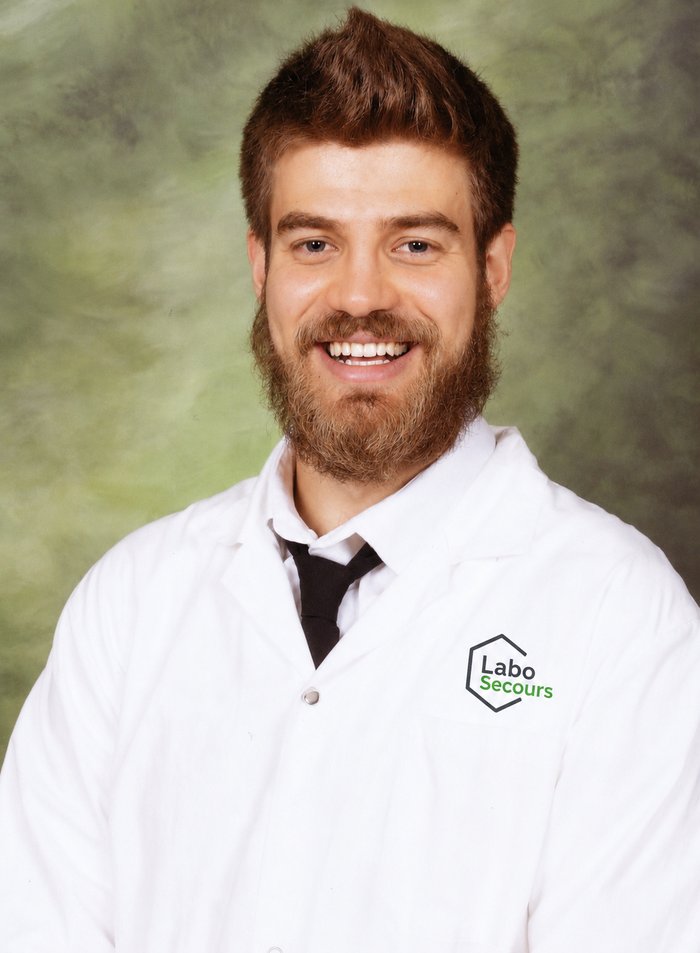
Étienne Blais, M.Sc.
is the founder and principal consultant at Labo-Secours, based in Sherbrooke, Quebec. He led the industrial oil analysis laboratory at Oleum Technologies (over 10,000 samples per year) before founding Labo-Secours, where he provides consulting services in analytical method development and validation, instrumentation, and laboratory management for Quebec industrial companies.