When Presentation Prep Turns Into a Research Project
Your technical team has to present results to a client in two weeks. The data is ready, but one question keeps coming up: does the argument hold up against what is being published elsewhere on the topic? Does the method used still match best practices, or have there been recent developments worth mentioning?
This is often where things go sideways. What was supposed to be a quick check becomes several days of research, carried out by the least available person on the team (often the one who is presenting). The result: either the presentation goes out without that validation, or it gets delayed for a task that was never on the calendar.
What a Real Targeted Literature Review Involves
Contextual research that is useful for a client presentation has nothing to do with a twenty-minute Google search, nor with a systematic review that takes several weeks, as done in academia. It sits somewhere in between:
- Distinguish primary sources from popularized ones. A blog post or a supplier's technical sheet does not carry the same weight as a published study or a recognized standard (ASTM, ISO, etc.).
- Check the date and the context of application. A method or conclusion can be accurate but outdated, or valid only under conditions different from the client's.
- Identify areas of consensus and areas of debate. A solid argument acknowledges the limits of what is established rather than presenting a single source as absolute truth.
- Gather only what serves the presentation. The goal is not an exhaustive file, but 3 to 5 solid references that directly support the client's key points.
It is an exercise in sorting as much as searching: the value comes from what gets set aside, not only from what gets found.
Integrating the Results Directly Into the Presentation
A literature review is useless if it stays in a separate document that nobody reads before the meeting. For it to have a real impact on the presentation:
- Deliver references ready to cite, with a context sentence ready to insert under a slide, not just a list of links.
- Explicitly flag friction points: where the client's argument is well supported, and where a claim deserves to be nuanced before the meeting.
- Provide a references slide at the end, not for the audience, but to answer confidently if a client asks a pointed question.
- Respect the team's working format: the notes must fit into the existing PowerPoint, not force a complete overhaul of a structure already built.
The goal is for the presenter to feel ready to defend every claim, not to memorize a research report on the side.
A Concrete Example
An industrial laboratory has to present to a client the results of a contamination analysis in a lubricating oil, and recommend an action threshold. The team has the test data, but no recent reference on hand to support the proposed threshold in front of a client who knows their process well.
A targeted review of a few hours confirms that the recommended threshold matches a recognized industry standard, identifies a recent update to that standard that must be taken into account, and spots an important nuance tied to the client's type of equipment. Integrated directly into the relevant slides, these three elements turn a recommendation that was defensible into one that is well supported.
A Verification, Not a Research Project
The difference between a solid presentation and a vulnerable one often comes down to a few hours of targeted verification, not days of research. Labo-Secours offers this service to support teams preparing an important technical presentation: contextual research, source validation and direct integration into existing material, without delaying the schedule.
Discover Labo-Secours consulting services to prepare your next client presentation on a solid scientific foundation. See how Labo-Secours can help.
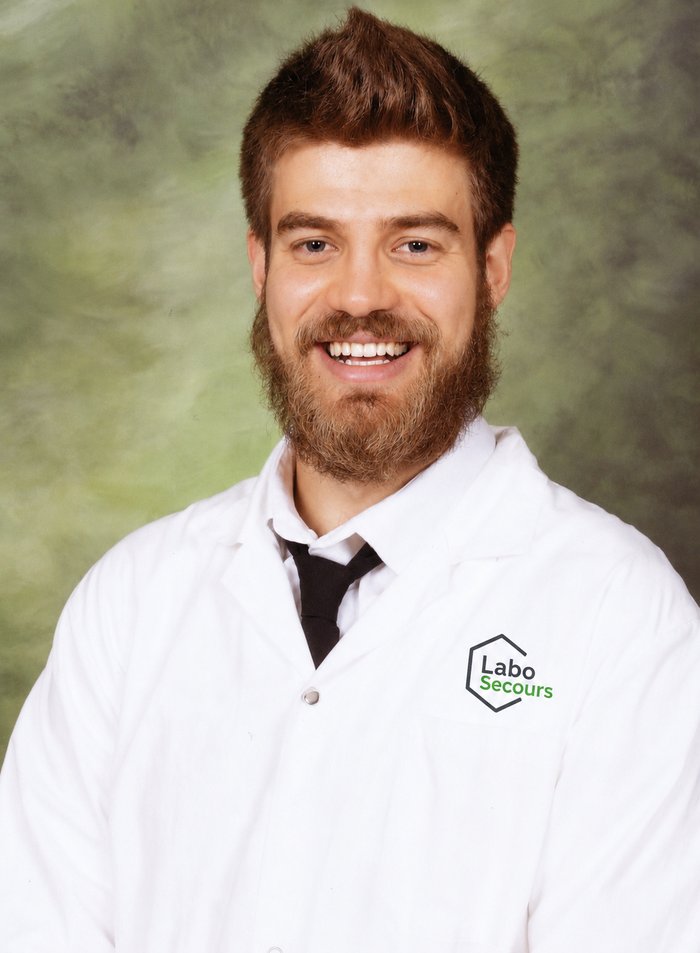
Étienne Blais, M.Sc.
is the founder and principal consultant at Labo-Secours, based in Sherbrooke, Quebec. He led the industrial oil analysis laboratory at Oleum Technologies (over 10,000 samples per year) before founding Labo-Secours, where he provides consulting services in analytical method development and validation, instrumentation, and laboratory management for Quebec industrial companies.