You've just spent thousands of dollars on a new instrument. The vendor sold you on its precision, its speed and its accuracy against the competition, and you made your choice. The instrument can indeed deliver those results, but first you have to tame it.
That starts with an analytical method that is rugged, accurate, precise and as fast as your needs and your context allow. Once the method is developed and validated, the ball is in your court: what keeps it delivering the expected results is how your team uses it.
Yet in many cases the method is bought ready-made from the vendor, who then trains the technicians over a few days. Key information gets lost in the handover, depending on how well notes were taken and how long it takes before a written method is properly drafted. The instrument works, but those gaps snowball: over time, passing knowledge from one person to the next leaves more and more room for error.
Training your staff is how you pass on that critical information and make sure it is respected over the full service life of the instrument. Understanding the analysis the instrument performs also lets a technician spot the errors that creep in with wear, a change of matrix or a change of conditions.
This article follows the chronological order: commissioning, method development and validation, writing the SOP, training the team, then monitoring over time. The examples come from ICP-OES and FTIR, but the logic applies to any analytical instrument.
1. Before the First Analysis: Write Down What the Instrument Has to Accomplish
Before the first analysis, write down in plain terms what the instrument has to accomplish: which matrices, which analytes, which concentration ranges, which detection limits, which turnaround times. That requirements document becomes your reference for judging whether the instrument delivers the results you expect.
The vendor installs the instrument and verifies that it works to their own specifications. That verification covers the instrument, not your samples: an instrument fully compliant with the manufacturer's specifications may still fail to meet your need. Making that connection remains the laboratory's responsibility.
Use commissioning to document what appears in no manual: serial numbers, software version, installed consumables, room conditions, people present. Those details become valuable the day results drift with no explanation.
2. Why the Method Matters More Than the Instrument
An instrument does not produce results: a method does. The work consists of developing a method that is rugged, accurate, precise and as fast as possible, then validating it on your real matrices rather than on the manufacturer's ideal solutions.
Buying the method ready-made from the vendor saves time, but it was designed for a generic case. Until someone has verified that it holds up on your samples, you do not know what it is worth in your lab. For a framework on the validation steps, see our article Developing or Validating an Analytical Method Without an In-House Chemist: Where to Start.
An ICP-OES example. The instrument flags no error, but the results are biased. When the composition of the calibration standards differs from that of the samples, the signal for the same concentration changes, and simple external calibration can then produce bias (Inorganic Ventures). Differences in viscosity or dissolved solids also change nebulization efficiency (Spectroscopy Online). And matrices rich in iron, calcium or silicon generate spectral interferences: an emission line chosen without verification can inflate a result without anyone noticing.
3. Write the SOP While the Method Is Still Fresh in Everyone's Mind
An SOP (standard operating procedure) serves as the laboratory's memory: without one, the method lives in the heads of two or three people. Even outside accreditation, ISO/IEC 17025 provides a useful reference framework: it requires documenting the competence requirements for each function that influences results, and having procedures and records for training, supervision, authorization and monitoring of personnel competence (A2LA).
A useful instrument SOP contains at minimum:
- the purpose and scope (which samples, which matrices, which limits).
- start-up, preliminary checks and preparation of calibration standards.
- the analysis steps, in order, with the critical parameters.
- the quality control acceptance criteria and what to do when they are not met.
- routine maintenance and consumables.
- the records to keep.
The most common mistakes:
- copying the manufacturer's manual without adapting it to your samples, your matrix and your context.
- having the SOP written by someone who does not use the instrument.
- failing to revise it after a change of method.
- skipping a trial period with a newly trained employee.
That last test is the most revealing: if a trained person can follow the SOP unaided, it is clear; if not, it isn't.
4. What Separates a Trained Operator From One Who Knows the Buttons
An operator who knows how to use the instrument can start a sequence, load samples and export a report. An operator who understands the method knows why each step exists and recognizes a suspect result when they see one. The difference shows the moment the routine goes off the rails:
| Situation | Operator who "knows the buttons" | Operator who understands the method |
|---|---|---|
| Quality control falls outside limits | Reruns the analysis hoping for better | Looks for the cause (standards, sample introduction, drift) before rerunning |
| Unusual sample matrix | Applies the method as is | Checks that the method applies to that matrix |
| An "odd" result or spectrum | Reports it without comment | Questions it and documents the investigation |
| Change of consumable or supplier | Sees no issue | Flags it and verifies the effect on results |
The problem is well known in infrared spectroscopy: FTIR users have often had little or no formal training in spectroscopy, and some cannot tell a "good" spectrum from a "bad" one (Spectroscopy Online).
Effective training on an analytical instrument therefore has to cover the motions and the principles: what the instrument measures, what can distort the measurement, and how to detect it.
An FTIR example, with a ZnSe liquid cell. The empty-cell spectrum is subtracted from every sample spectrum, so it has to be acquired properly. If the cell is not clean or not perfectly dry, that reference spectrum does not reflect the cell alone. And as soon as a sample runs through it, the solvent or contamination it held can disappear, while they keep being subtracted from every spectrum.
A trained technician spots this kind of error and makes sure the empty-cell spectrum is acquired correctly. Results stay reliable, analyses don't have to be rerun, and the laboratory saves time.
Vendor training is a starting point, not a finish line. It covers the instrument; it cannot cover your samples, your tolerance limits or your practices.
| Vendor training | Ongoing in-house training | |
|---|---|---|
| Timing | At installation | Throughout the instrument's life |
| Content | Operation, software, basic maintenance | Method, real matrices, quality control, problem cases |
| Limitation | Generic, without your samples | Depends on the team's discipline |
| Evidence of competence | Often an attendance certificate | Authorization after demonstration, periodic review |
A solid training path generally follows this sequence:
- Take the vendor training with the people who will actually run the instrument.
- Practise under supervision with known samples (reference materials, control samples).
- Authorize each operator after a demonstration of competence, and record that authorization.
- Schedule periodic refreshers and a cross-comparison of results between operators.
5. What Makes Results Drift Once the Routine Sets In
In the situations described above, the instrument works, the numbers look plausible and the report goes out to the client. The warning signs arrive later: discrepancies between operators, quality control drift, disagreement with an outside laboratory, a complaint.
A periodic review covers three things: quality control data, the SOP and competence.
- Trend control sample results over time rather than one at a time: slow drift doesn't show on a single report.
- Compare results between operators on the same sample, at least once a year.
- Update the SOP as soon as a parameter, a consumable, a supplier or a software version changes.
- Retrain when the context changes: new matrix, new client, new requirement.
Wear is part of the picture too. A fouled nebulizer, a scratched optical window, a tired electrode or a lamp at the end of its life all shift results without triggering any error on screen. To see how another type of analysis is read over time, check our article Industrial Oil Analysis Report: What Does It Measure?
Checklist: Before Declaring the Instrument "In Production"
- The need is written down: matrices, analytes, ranges, detection limits, turnaround times.
- The method is validated on your real matrices, not only on calibration standards.
- An SOP exists, it is adapted to your samples, and a new employee can follow it unaided.
- The quality control criteria and the response to a non-conformity are written down.
- Each operator has demonstrated competence on known samples.
- Each authorization is recorded (who, when, on which method).
- At least two people have mastered the instrument, so you don't depend on one.
- A training refresher and a cross-comparison of results are scheduled.
- Changes (method, consumables, software) trigger an SOP update.
Time Spent Up Front, or Paid Back in Reruns
Developing the method, writing it down and training the team takes time up front, but it is what separates an instrument that produces numbers from an instrument that produces results you can rely on. Time saved at commissioning is rarely a gift: it comes back as repeated analyses, disagreements with a client, and decisions built on fragile numbers.
Labo-Secours supports Quebec laboratories with instrument commissioning, method development and validation, SOP writing and team training, whether the instrument is an ICP-OES, an FTIR or another analytical system.
Discover Labo-Secours consulting services so your new instrument delivers the results you expect from its first year. See how Labo-Secours can help.
Sources
- Spectroscopy Online: Common Problems with FT-IR Instruments and How to Avoid Them
- Inorganic Ventures: ICP-OES Measurement
- Spectroscopy Online: The Importance of Method Development for Trace-Element Analysis by ICP-OES
- A2LA: Explaining ISO/IEC 17025 Competency Requirements
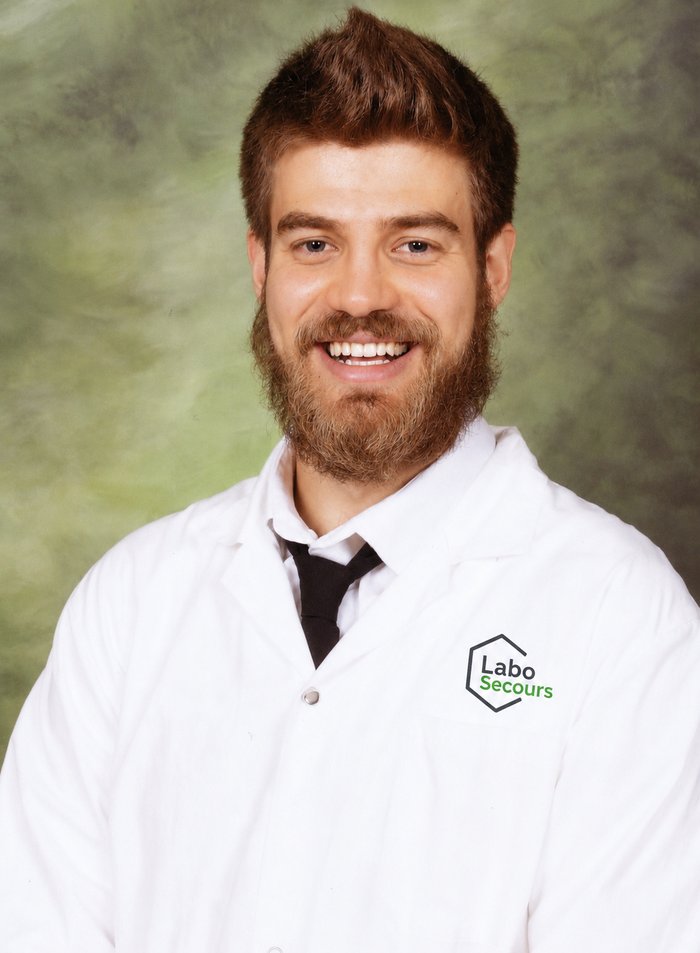
Étienne Blais, M.Sc.
is the founder and principal consultant at Labo-Secours, based in Sherbrooke, Quebec. He led the industrial oil analysis laboratory at Oleum Technologies (over 10,000 samples per year) before founding Labo-Secours, where he provides consulting services in analytical method development and validation, instrumentation, and laboratory management for Quebec industrial companies.